Make Dollar Tree basics look like rented wedding centerpieces with 10 easy hacks: stacked-glass hurricanes, faux stone compotes, floating candles, mercury gl...
Gathova
How to Make Baby’s Breath Look Expensive

Joanna Mercer
Joanna Mercer is an enthusiastic DIY event decorator and the creative spirit behind Gathova's party guides. With years of hands-on experience designing stunning tablescapes, balloon garlands, and custom photo backdrops for friends and family, she specializes in accessible, budget-friendly celebrations. Joanna loves sharing her practical tips and crafting tutorials to help anyone turn an ordinary space into a memorable party venue.
Published
Baby’s breath is one of my favorite “quiet heroes” in party decorating. I’ve used it everywhere from backyard baby showers to big birthday tables where I needed that airy, cloud-like volume without the cloud-like price tag. The secret is that baby’s breath only looks cheap when it’s treated like filler. When you prep it well and style it on purpose, it reads modern, abundant, and honestly kind of luxe.

Below are the exact tricks I use to make inexpensive Gypsophila look expensive: conditioning, manipulating the shape, tinting or spray painting with a few common-sense precautions, and clustering it so it looks intentional.
What makes it look cheap
When baby’s breath looks bargain-bin, it is usually because of one of these issues:
- It’s too sparse. One or two skinny stems in a big vase looks like an afterthought.
- It’s the wrong scale. Tiny sprigs on a big table disappear.
- It’s styled like filler. Tucked around other flowers with no shape of its own.
- It’s dehydrated or browning. Crispy tips read “leftover grocery bouquet.”
My fixes are simple: hydrate thoroughly, cut and cluster, choose the right vessel, and commit to a clean shape.
Prep it like a florist
Step 1: Strip the lower stems
Remove any foliage that will sit below the waterline. Baby’s breath gets cloudy water quickly, and clean stems buy you time.
Step 2: Re-cut and condition
Give every stem a fresh cut, ideally at an angle. Then place in clean, room-temperature water right away.
- Timing: If you can, hydrate for 4 to 12 hours before arranging. Overnight is my favorite.
- Water: Change it if it clouds up. I’ve found baby’s breath responds especially well to fresh water when you are trying to keep it fluffy and bright.
Step 3: Quick quality check
Sort your bunches into:
- Hero stems: fullest sprays for the front and top.
- Support stems: medium stems to build the body.
- Short stems: smaller pieces for bud vases, tuck spots, and compacts.
This tiny bit of organizing keeps the final arrangement from looking random.
Shape it on purpose
Baby’s breath is naturally wispy. To make it look high-end, you want mass plus intention. Here are my go-to manipulation tricks.
Use the cloud cluster method
This is the easiest way to make baby’s breath look like a designer chose it on purpose.
- Create mini-bundles of 3 to 6 stems.
- Hold the bundle upright and gently fan the tops outward with your fingers.
- Tape the stems together about 3 to 5 inches below the blooms using floral tape or clear tape.
- Repeat until you have several matching clusters.
- Place clusters as units in your vase, rather than adding stems one-by-one.
Clustering gives you bold, rounded shapes that read modern.
Shorten it more than you think
Long, leggy stems can look messy. Shorter cuts create a denser “pouf.” For centerpieces, I often cut stems so the blooms sit only 1.5 to 2 times the height of the vase.
Build a dome, not a spray
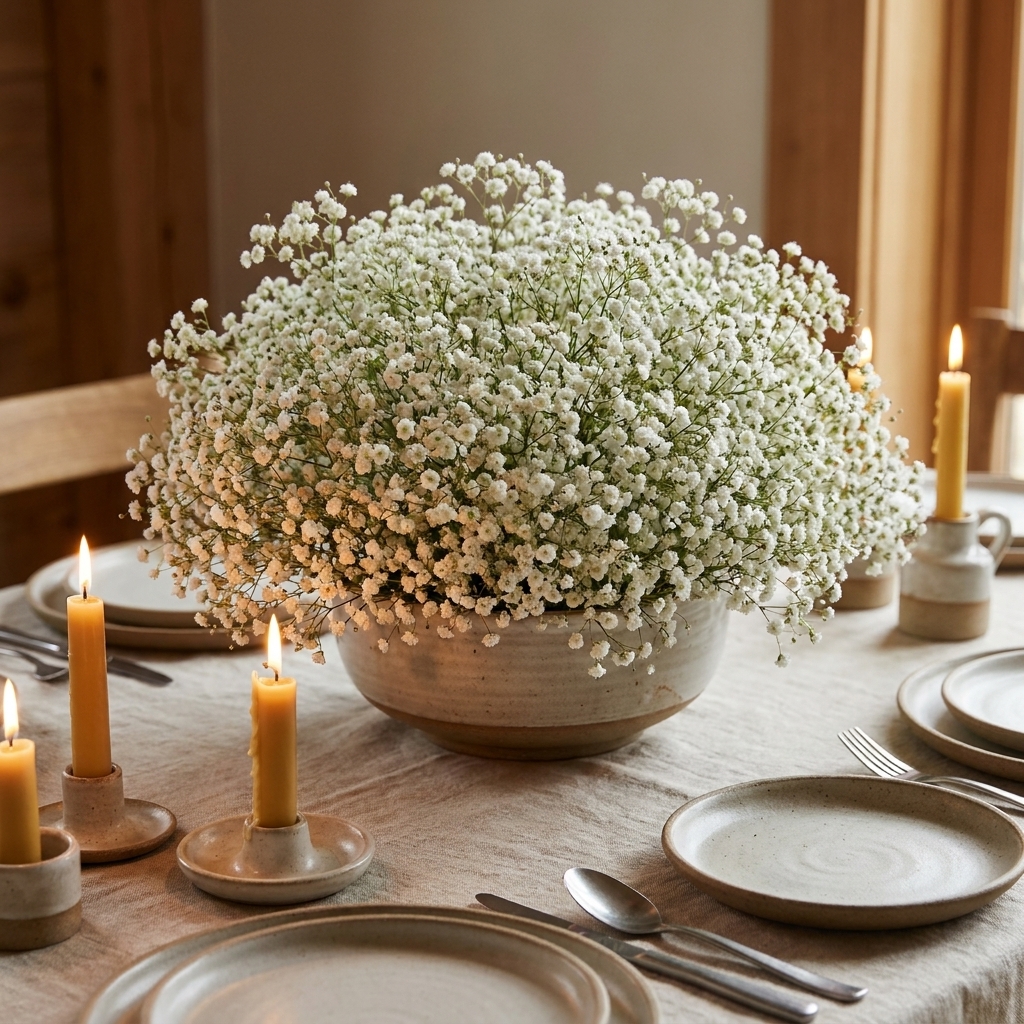
A luxe baby’s breath arrangement usually has a rounded silhouette. Start by placing your fullest clusters to form a loose dome, then fill gaps with smaller pieces. Step back often and rotate the vase.
Tinting and spray color
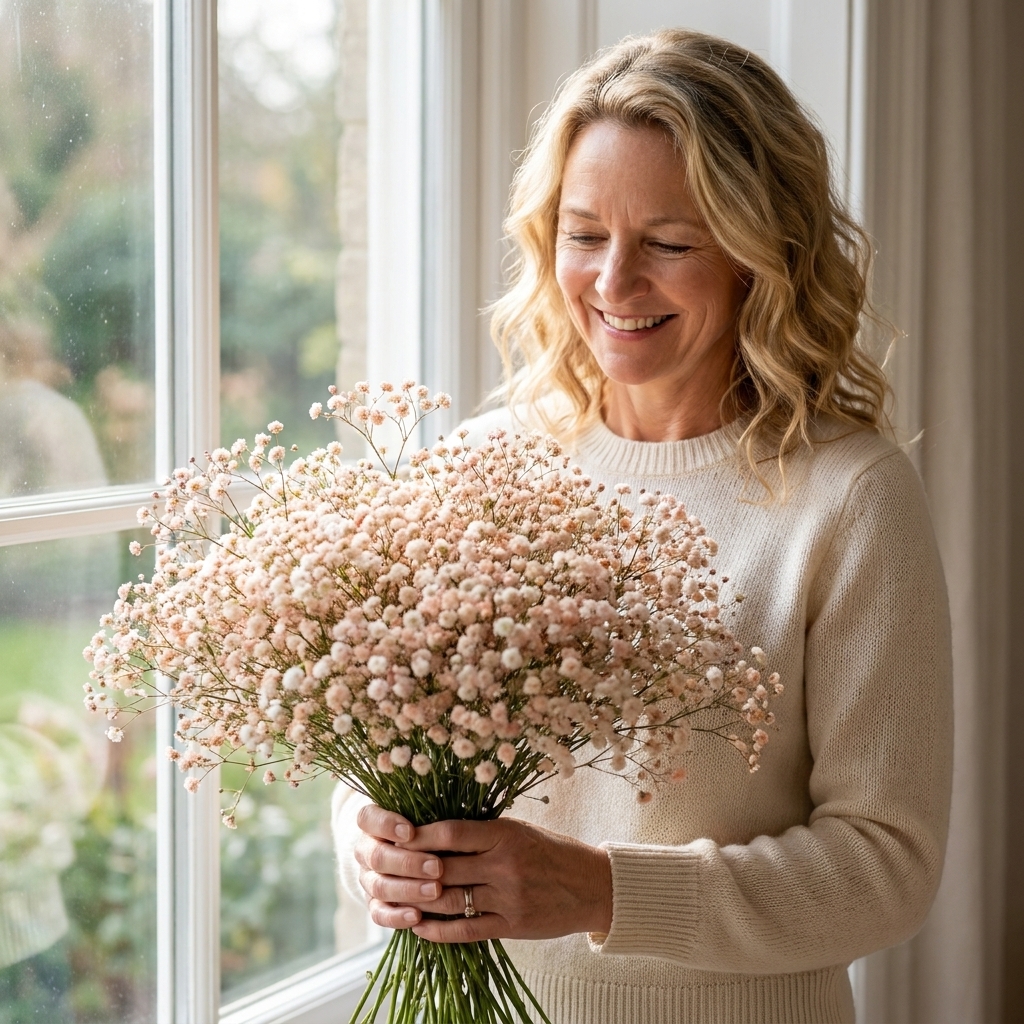
Tinted baby’s breath can look incredibly current, especially for monochrome tablescapes or themed parties. The key is to keep it soft and dimensional, not crunchy and opaque.
Choose your color strategy
- Best for expensive vibes: creamy white, warm beige, soft blush, muted taupe, pale sage, dusty lavender.
- Harder to make look luxe: neon brights and heavy primary colors (they can look craft-store fast).
Paint vs tint (quick difference)
- Floral spray tint: a light, airy coating that shifts the overall tone. This is my go-to for a modern look.
- Water tinting: adding floral dye to water can subtly change tone over time, but results vary and can be patchy with baby’s breath.
If you are coloring fresh stems, I stick with products labeled for fresh flowers and follow the label directions. Regular craft paint is where things tend to go wrong fast.
How I spray it without wrecking it
- Work outside or in strong ventilation with a drop cloth.
- Hydrate first. I color after the stems have had a good drink, not before.
- Use light passes from about 10 to 14 inches away.
- Rotate the bundle as you spray so you do not get flat, one-sided coverage.
- Stop while it still looks airy. If it becomes a solid puffball, it loses that expensive texture.
Practical safety notes I follow: I keep spray work away from food and serving areas, avoid inhaling overspray (a mask is smart if you are sensitive), and let everything dry fully before bringing it near linens or place settings.
Subtle ombré looks high-end
One of my favorite tricks is an ombré fade: keep the center more natural and add slightly deeper tone toward the outer edges. It adds dimension like a designer bouquet.
What to expect with lifespan
In my experience, colored baby’s breath often has a shorter, less perky lifespan than untouched stems. How much shorter depends on humidity, how heavy the coating is, and the product itself. I plan to color as close to the event as is practical.
How much to buy
This is the question everyone asks when they are trying to get that “abundant” look. Exact counts vary by bunch size, but here are planning ranges that have treated me well:
- Low 6 to 8 inch bowl centerpiece: 2 to 4 bunches for a tight dome.
- Medium vase (about 8 to 10 inches tall): 3 to 5 bunches for a full cloud shape.
- Bud vase parade (10 to 15 small vases): 1 to 2 bunches total if you keep stems short.
- Statement floor vase puff: 6 to 10 bunches, depending on how wide you want the top.
If you are on the fence, I would rather size up and split extras into bud vases than end up with one thin arrangement.
Make it look fuller
Pick the right vessel
Baby’s breath looks most elevated when the vase matches the vibe:
- Modern: matte white ceramics, clear cylinders, simple bud vases grouped in multiples
- Romantic: vintage glass, soft-toned bottles, compote bowls
- Minimal: one sculptural vase with a tight, rounded baby’s breath cloud
Avoid overly tall vases for sparse stems. If your vase is tall, you will need a lot of clusters to keep it from looking thin.
Use a grid for control
For wide-mouth vases or bowls, create a stem grid across the opening:
- Clear tape grid: crisscross strips to make squares
- Chicken wire pillow: a loose ball tucked inside (great for compotes)
This keeps baby’s breath from flopping outward and helps you maintain that intentional dome.
Repeat the same moment
The easiest “luxury” trick is repetition. Instead of one big centerpiece, do three smaller baby’s breath moments down a table, or repeat the same fluffy bud-vase grouping on every cocktail table.
Three go-to formulas
1) Low cloud bowl
Best for: dining tables, dessert tables, gift tables
- Use a low bowl or compote.
- Create a tape grid or chicken wire base.
- Insert baby’s breath in tight clusters, keeping the silhouette round and slightly domed.
- Finish with candles around it for glow and height variation.
2) Bud vase parade
Best for: long tables, brunch showers, casual parties that still feel styled
- Gather 8 to 20 small bottles or bud vases.
- Put 2 to 5 short stems in each.
- Group them in sets of 3 to 5 along the table.
This is my “looks like a florist did it” option because it feels abundant without one giant arrangement.
3) Statement floor puff
Best for: entryway moment, gift corner, photo backdrop side accents
- Use a tall, heavier vase so it will not tip.
- Make multiple taped clusters.
- Keep stems shorter than you expect so the top becomes a big, clean cloud.
Add one hero flower
If you want maximum impact without paying for full mixed bouquets, use baby’s breath as the mass and add one standout bloom type as the focal point. Think:
- White roses + baby’s breath: classic and wedding-ish in the best way
- Tulips + baby’s breath: simple, springy, modern
- Carnations + baby’s breath: surprisingly luxe when kept monochrome
- One orchid stem + baby’s breath: high contrast, very editorial
Keep the palette tight. Two colors plus green, max, if you want it to read expensive.
Allergies, skin, and pets
A quick note from the real world: baby’s breath can irritate sensitive skin for some people, especially if you are handling a lot of stems. If you know you react to plant sap, wear gloves and wash up after arranging.
Also, keep arrangements out of reach of kids and pets who like to nibble decor. If you have a curious cat, those fluffy clouds suddenly become very interesting.
How far ahead to prep
For most home events, I aim to buy baby’s breath 1 to 2 days before and hydrate it immediately. You can often stretch it longer with clean water and cool storage, but it is at its prettiest when it has had time to drink and fluff up.
- Best prep schedule: hydrate overnight, arrange the next day
- Color schedule: color after hydration and closer to the event so it stays fresh-looking
Common problems
It smells strong
Baby’s breath has a distinct scent that some people notice more than others. Use it in well-ventilated spaces, change water often, and avoid placing large quantities right next to food.
It’s turning brown
Browning is often dehydration or dirty water. Re-cut stems, refresh the water, and remove any pieces that are past their prime. In arrangements, browning usually hides best low and inside the cluster, not on the outer edges.
It looks messy instead of fluffy
You likely need shorter cuts and tighter clusters. Pull it out, re-bundle into mini clouds, and rebuild your dome shape.
More budget ideas on Gathova
If you love making inexpensive materials look high-end, you will probably enjoy these:
- Budget Party Hacks for more save-or-splurge strategies
- Thrift Store Decor Flips: 9 High-End Event Props for my favorite upcycles
- Rent vs Buy Event Decor for Large Parties when you are planning bigger
My rule for expensive baby’s breath
If you remember nothing else, remember this: commit to abundance and a clean shape. Baby’s breath looks luxurious when it is styled as the main character, kept hydrated, and arranged in confident clusters. A few intentional clouds in the right vase can do what a whole mixed bouquet sometimes cannot: make the entire table feel finished.