A real-life comparison of silk vs. fresh flowers for DIY wedding centerpieces—cost, durability, prep timeline, photography, and venue stress—plus hybrid idea...
Gathova
7 Inexpensive Greenery Picks for Lush Table Runners

Joanna Mercer
Joanna Mercer is an enthusiastic DIY event decorator and the creative spirit behind Gathova's party guides. With years of hands-on experience designing stunning tablescapes, balloon garlands, and custom photo backdrops for friends and family, she specializes in accessible, budget-friendly celebrations. Joanna loves sharing her practical tips and crafting tutorials to help anyone turn an ordinary space into a memorable party venue.
Published · Last updated
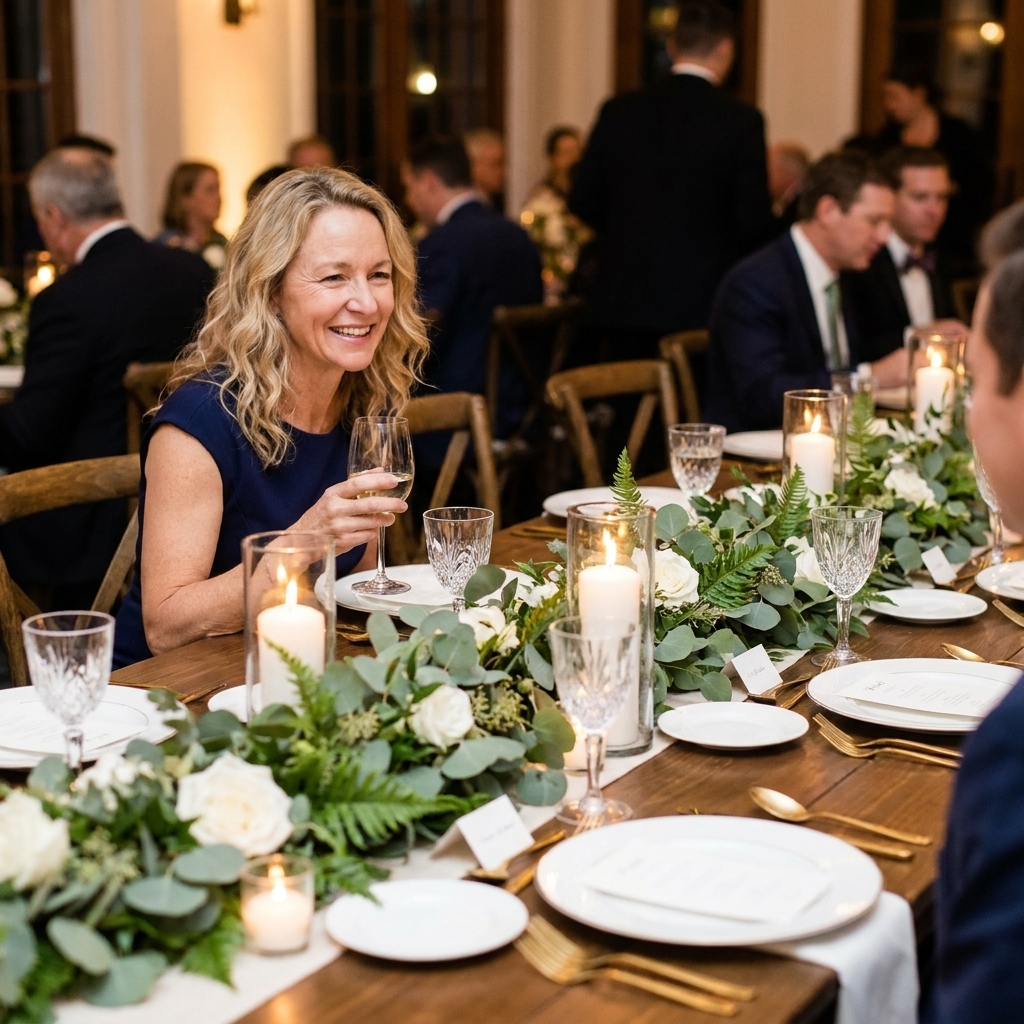
I learned the magic of greenery runners the same way I learned most party truths: the day before a big backyard gathering, staring at a too-bare table, realizing flowers alone were not going to stretch. Greenery is the secret sauce. It makes a table feel full, intentional, and a little bit fancy, even when your budget is doing a tightrope walk.
If you are decorating long banquet tables, the goal is not “a perfect Pinterest garland.” The goal is a runner that reads lush from five feet away, sits low enough for conversation, and does not eat your entire centerpiece budget.
Below are my favorite inexpensive types of greenery for thick, beautiful runners, plus the quick prep and placement tricks that make cheap foliage look expensive.
Before you buy: how much greenery you actually need
For a 10 to 14 inch wide runner built from loose stems, a realistic starting point is:
- Medium fullness: 6 to 10 feet of greenery per 6-foot table
- Lush fullness: 10 to 16 feet of greenery per 6-foot table (especially if you are layering different types)
That range looks wide because it depends on the form. Loose bunches behave differently than pre-made garlands sold by the foot, and some greens are airy (great for volume, less coverage) while others are dense (great coverage, less length needed). My favorite approach is to combine one “base” greenery (cheap, voluminous) with one “pretty” greenery (adds texture and that styled look).
Quick buying guide (so you do not overbuy)
If you are staring at the floral cooler wondering what “enough” looks like, here are two starting-point shopping lists. I am assuming a 10 to 14 inch runner and a look that feels lush from five feet away, not a perfectly packed garland.
- One 6-foot table: 3 bunches salal (or pittosporum) for the base + 2 bunches seeded eucalyptus (or 1 bunch ruscus) for the top
- One 8-foot table: 4 bunches salal (or ferns) for the base + 3 bunches seeded eucalyptus (or 2 bunches ruscus) for the top
If you are using pre-made garland, measure the table and buy length plus a little extra for overlap (I like having 1 to 2 extra feet per table so I can “shingle” sections and hide seams).
The 7 best inexpensive greenery types for banquet table runners
1) Seeded eucalyptus (fresh or faux)
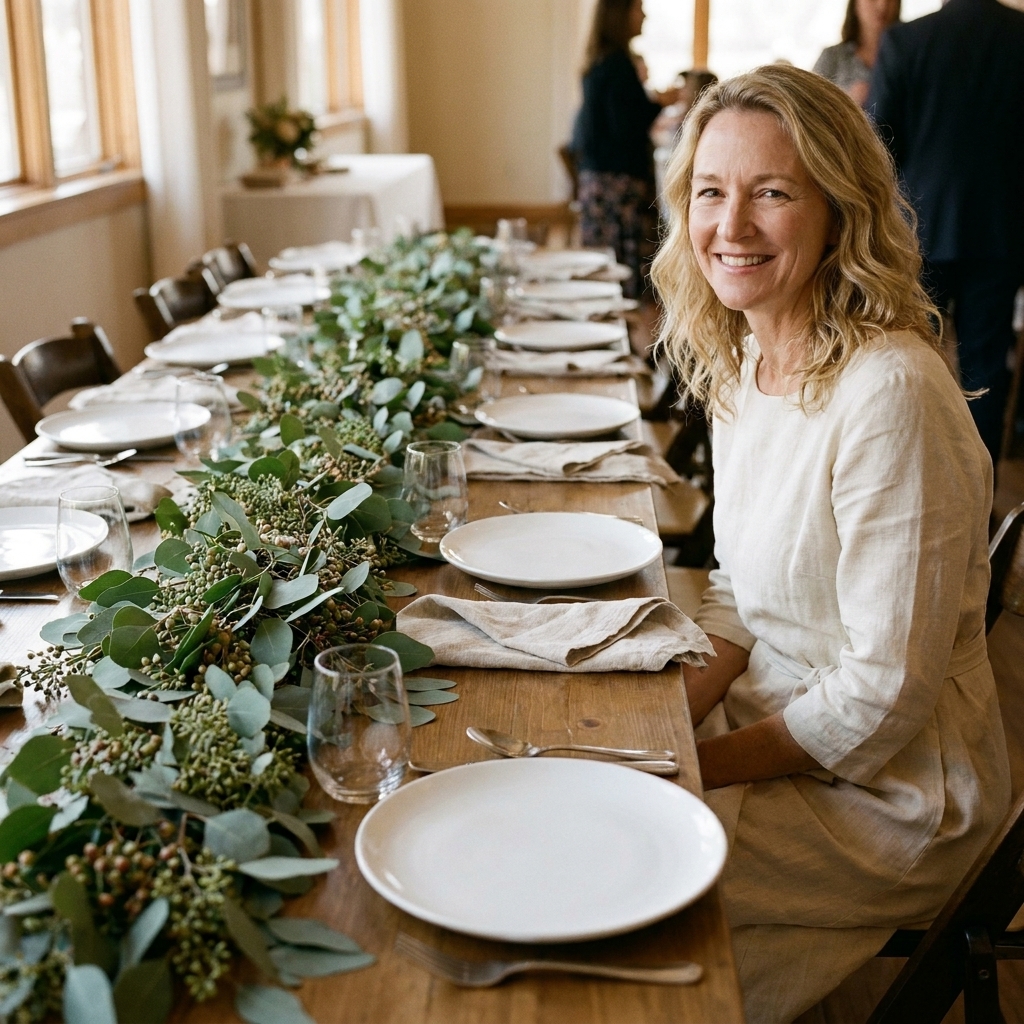
If you want maximum “wedding vibes” on a reasonable budget, seeded eucalyptus is the crowd pleaser. The leaves are small and plentiful, so it looks fuller than you would expect from a single bundle.
- Best for: romantic, modern, garden, neutral palettes
- Why it is budget-friendly: a little goes a long way visually because the leaf clusters look dense
- Joanna tip: build your runner in short sections (about 18 to 24 inches). Overlap the ends like shingles. It hides gaps and makes it look like one continuous garland.
If you are deciding between real and faux, I walk through pros and cons in Silk vs Fresh Flowers for DIY Wedding Centerpieces. The same logic applies to greenery: faux wins on reuse and prep time, fresh wins on movement and scent.
2) Salal (often sold as “lemon leaf”)
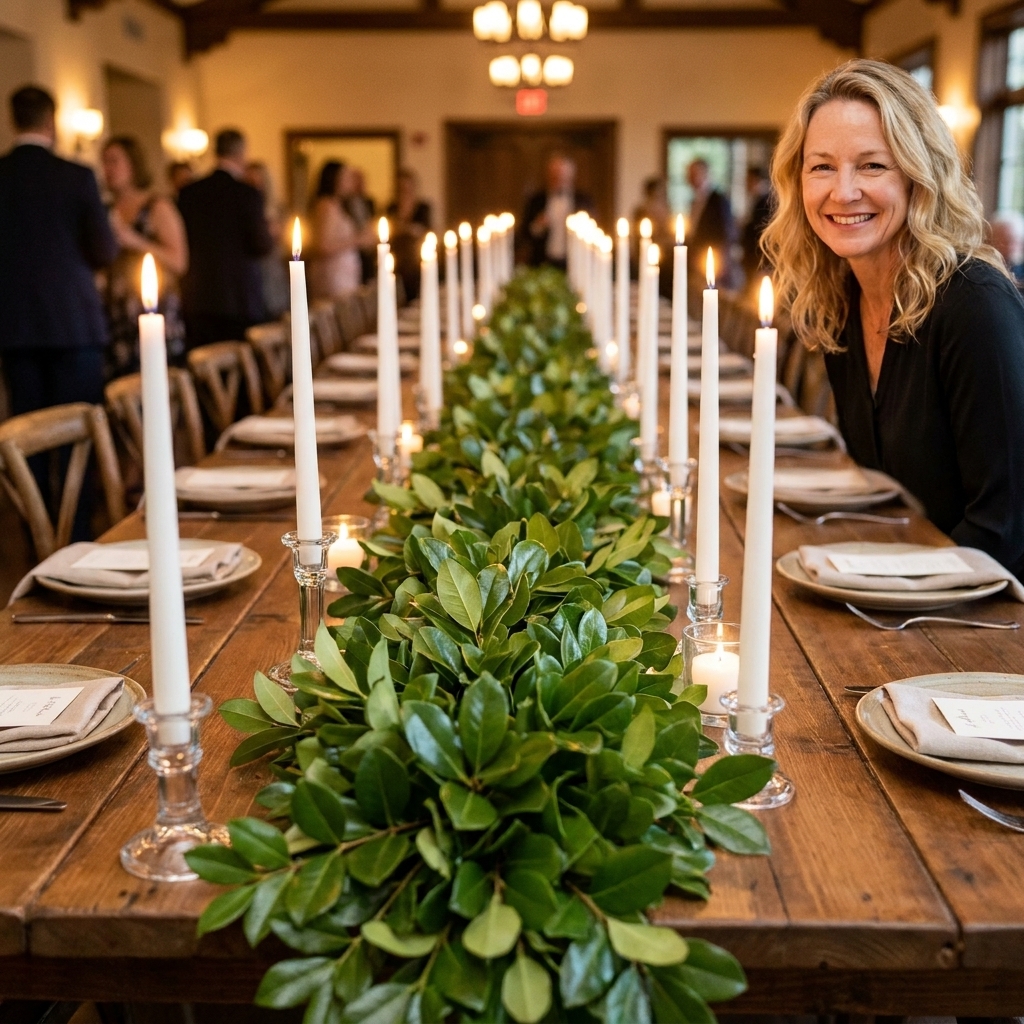
Salal is one of my top “base greens” because it is sturdy, glossy, and reads expensive when layered. It is also forgiving. Leaves hide mechanics, tape, and the occasional awkward stem.
- Best for: classic greenery runners, candlelit tables, formal banquets
- Why it is budget-friendly: it is often cheaper than eucalyptus per foot, and it fills space fast
- Joanna tip: point most stems in the same direction so the runner looks intentional, then flip a few pieces the opposite way for texture.
3) Italian ruscus
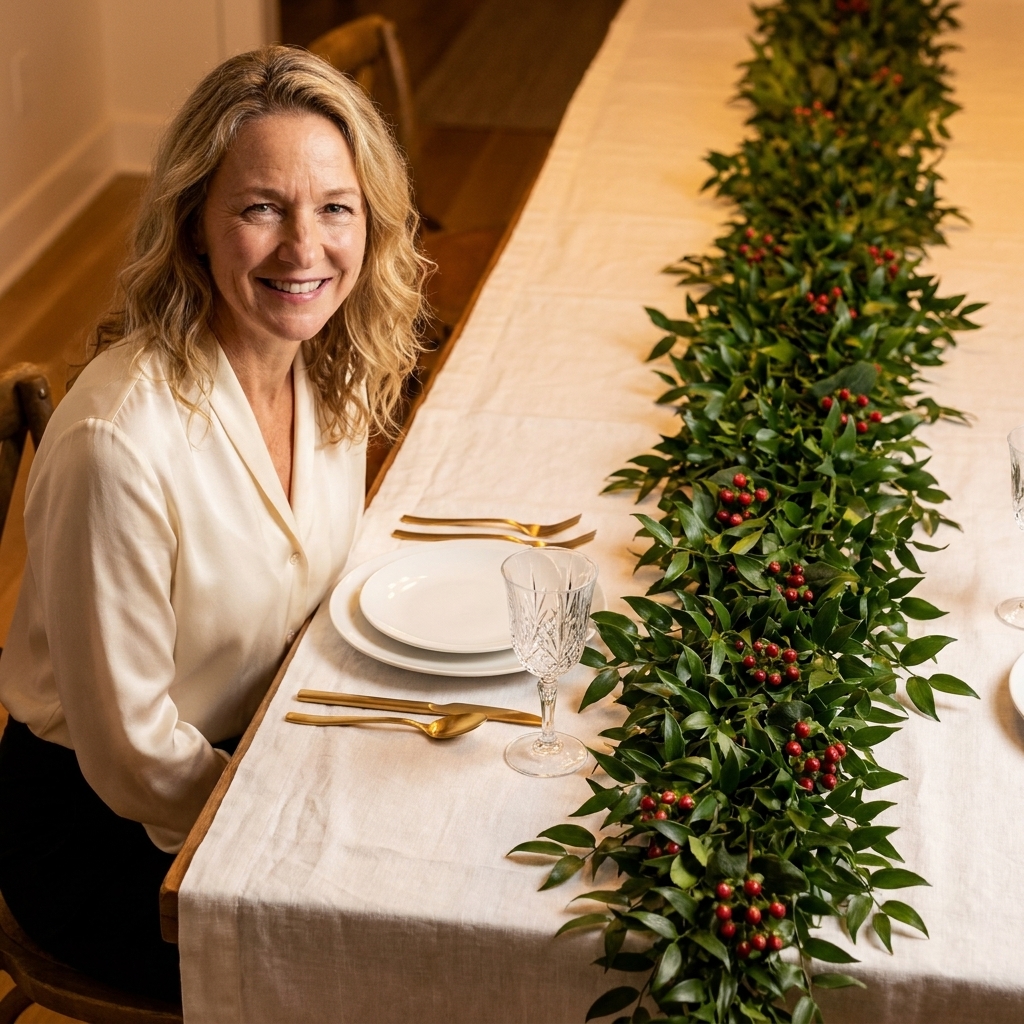
Ruscus is the sleek, tidy friend in the greenery family. It is less fluffy than salal, but it photographs beautifully and gives you that airy, editorial line down the table.
- Best for: minimalist runners, modern tablescapes, long king tables
- Why it is budget-friendly: it can be used more sparingly while still looking styled
- Joanna tip: use ruscus as the “top layer” over a cheaper base (like pittosporum or salal). Your eye reads ruscus first, and your budget breathes again.
4) Silver dollar eucalyptus
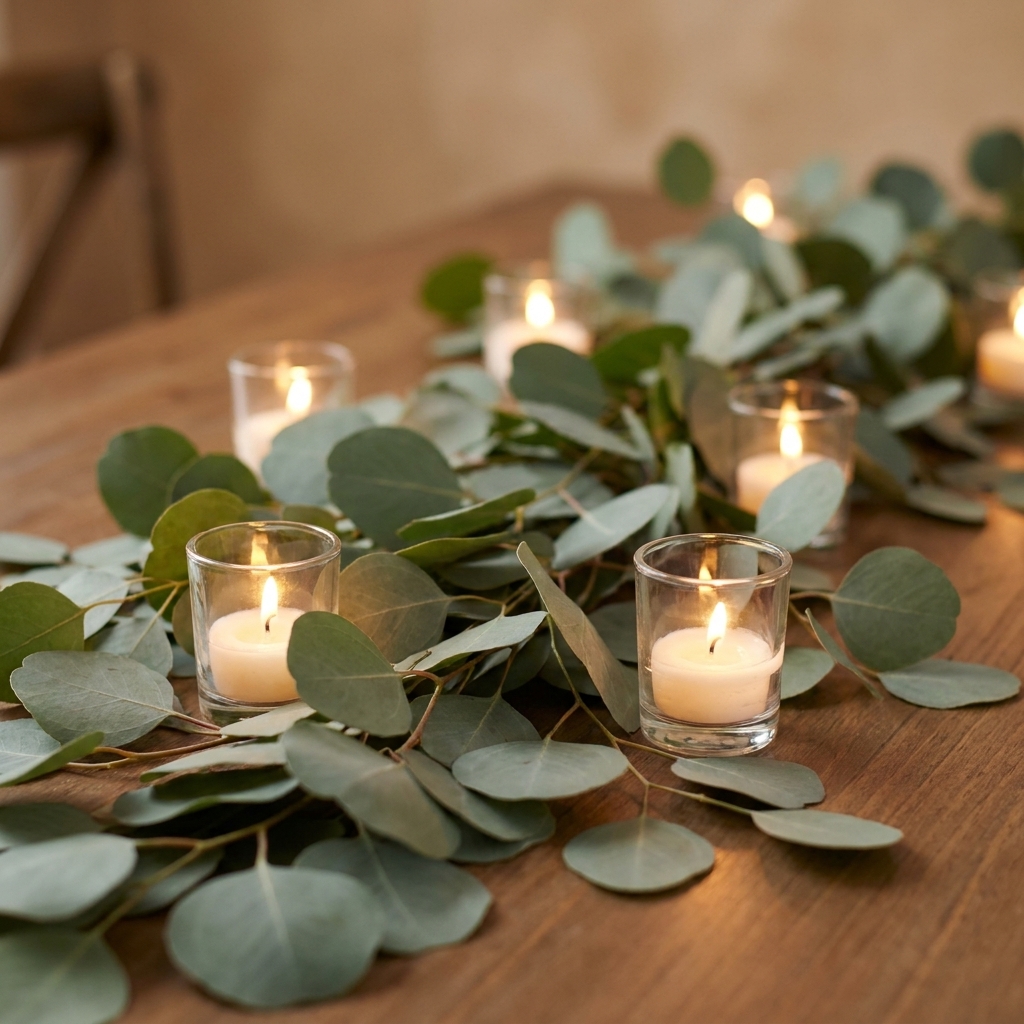
Those round leaves are instantly recognizable and they add shape, which is what makes a runner feel designed instead of dumped. Because the leaves are bigger, silver dollar eucalyptus can cover a lot of visual real estate quickly.
- Best for: modern, boho, winter whites, soft romantic themes
- Why it is budget-friendly: the leaf size creates “coverage” even if your runner is not super thick
- Joanna tip: keep candles and decor slightly above the leaves so nothing looks swallowed. If you are using tapers, make sure they are truly secure. I use the method in How to Secure Taper Candles on Event Tables whenever kids, pets, or enthusiastic dancers are part of the guest list.
5) Pittosporum (green or variegated)
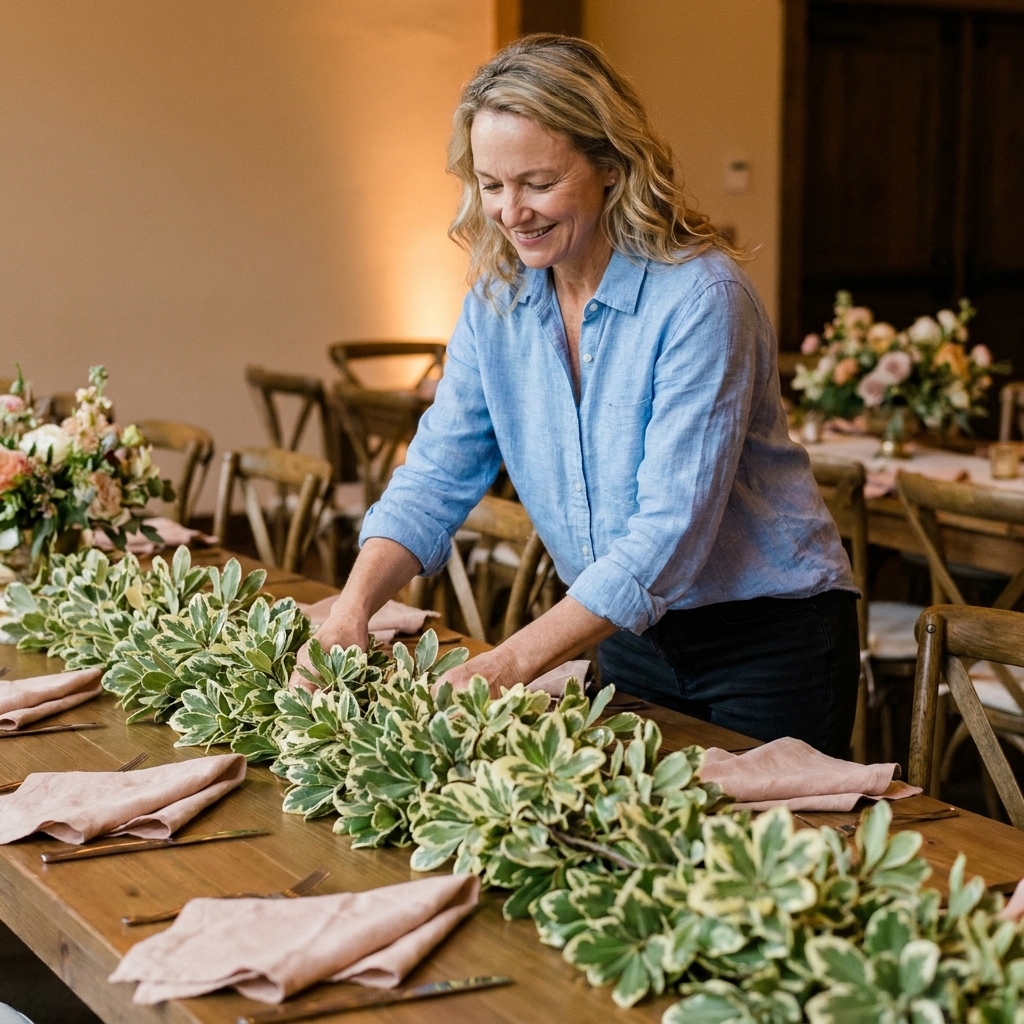
Pittosporum is my underrated budget hero. The leaf clusters are plentiful, and variegated pittosporum gives you that “designer mix” effect without adding flowers.
- Best for: spring and summer tables, colorful themes, garden party looks
- Why it is budget-friendly: great volume, easy to fluff, and looks layered even when it is your only green
- Joanna tip: tuck pittosporum around candle bases and bud vases to hide gaps and mechanics.
6) Ferns (leatherleaf, sword, or hardy bunch ferns)
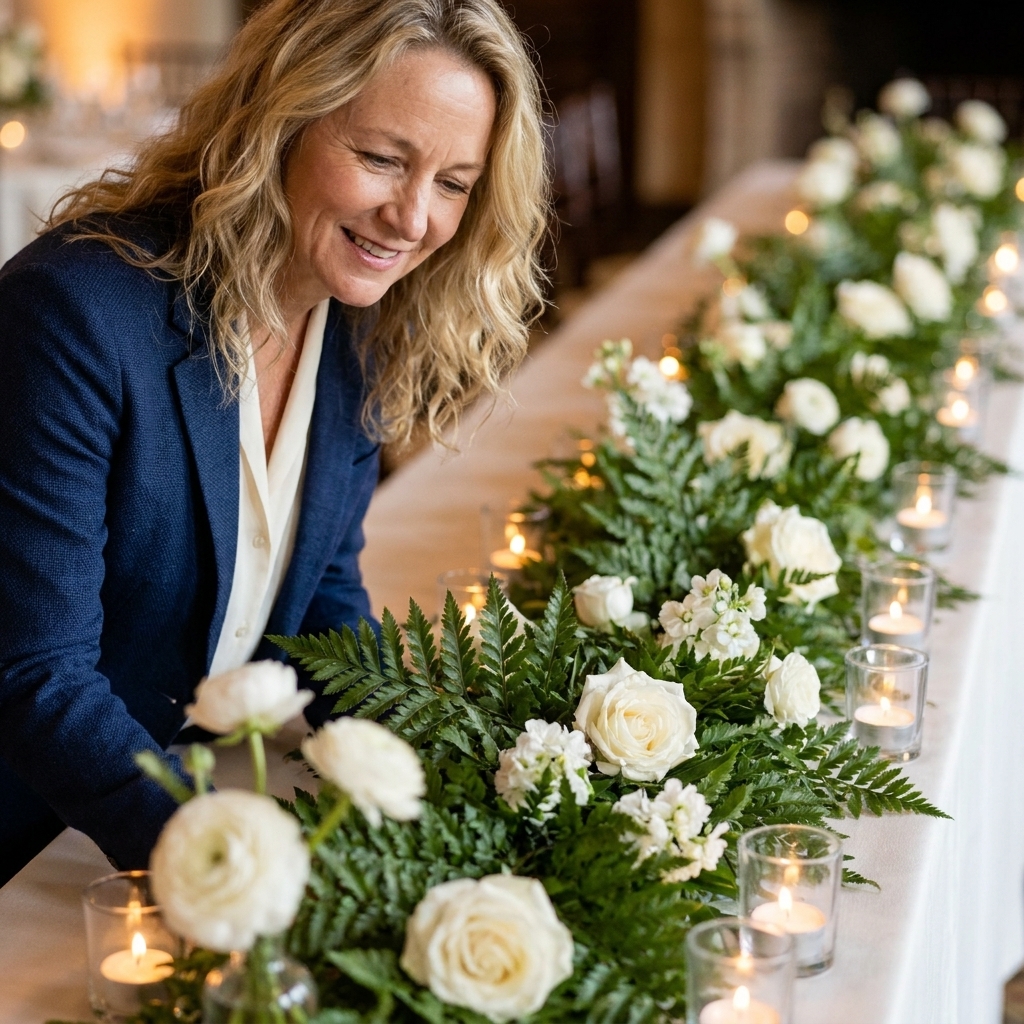
If you want instant fullness, ferns are your friend. They are basically volume on a stem. Ferns also bring movement, which makes even a simple runner feel lush and alive.
- Best for: tropical, woodland, whimsical, outdoor celebrations
- Why it is budget-friendly: big fronds cover distance fast, especially when layered
- Joanna tip: use ferns as a base layer, then add one “prettier” greenery on top so the runner does not look flat. Seeded eucalyptus over fern is a favorite combo.
7) Grocery store greens (cedar, pine, or mixed seasonal bunches)
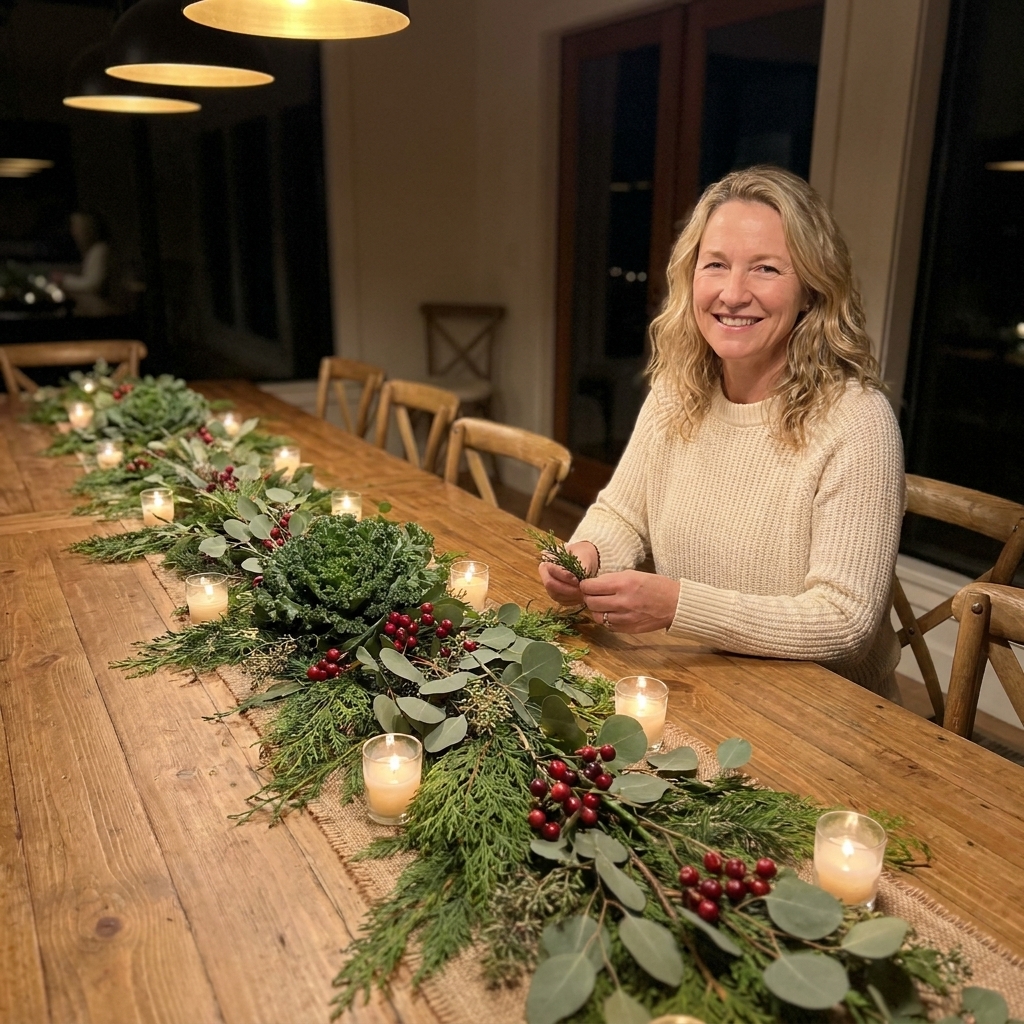
When I need a long runner fast and cheap, I check the grocery floral section before anything else. Around the holidays, you can often find cedar, pine, or mixed seasonal greens that look amazing when massed.
- Best for: fall and winter parties, rustic tables, holiday dinners
- Why it is budget-friendly: sold in bunches, easy to grab last minute, often priced lower than specialty stems
- Joanna tip: keep these runners low and candle-forward. A few clusters of greenery with lots of candlelight can read just as lush as a continuous garland. For resinous evergreens like cedar and pine, I stick to glass holders or hurricanes, keep wicks trimmed, and never let flame hover directly over the needles.
How to make inexpensive greenery look thick
Layer like a stylist
- Base layer: your cheapest, most voluminous green (salal, pittosporum, ferns, grocery greens)
- Top layer: your “pretty” green (seeded eucalyptus or ruscus)
- Accent layer: optional, but powerful. A few stems of something different adds depth.
Work in sections, not one long snake
Long tables trick you into building one continuous runner, and that is how you end up with thin spots. I build 18 to 24 inch clusters and overlap them. It looks fuller and it is easier to adjust around place cards, candles, and serving platters.
Use the five-foot check
After you lay your base layer, step back about five feet. If it reads full from there, you are done. If it looks sparse, you do not need to rebuild, you just need to add a second pass in the thinnest spots.
Keep it low, then add a few height moments
If everything is flat, it can look sparse. If everything is tall, guests cannot see each other. I keep greenery low, then add small height moments with candles or bud vases. If you are planning bigger florals, Tall vs Low Centerpieces helps you pick what works for conversation and sightlines.
Setup notes: service, mess, and scent
- Runner width matters: if you are doing family-style platters, keep your greenery runner narrower so it does not crowd the food. For buffet service, you can go a little wider because the table stays cleaner.
- Do a quick rub test: if a green feels oily or sticky, assume it can mark linens. A narrow strip of kraft paper under the runner is a simple insurance policy, and you can hide it with your base layer.
- Watch scent sensitivity: eucalyptus is gorgeous, but it can be strong. If you know your crowd is scent-sensitive, use it as a light top layer instead of the whole runner.
Prep and handling tips
- Hydrate fresh stems: give them a clean cut and let them drink in water for a few hours or overnight if possible.
- Strip the bottom leaves: anything that will sit under the runner or near moisture should come off. Cleaner, less messy, easier to place.
- Transport smart: keep greenery in a tote or bin lined with a slightly damp towel. Not soaking wet, just humid.
- Protect linens: some greens can shed or leave sap. If you are worried, lay a narrow strip of kraft paper under the runner and hide it with the first layer.
- Build close to go time: for fresh runners, I assemble as late as I can, keep them out of direct sun, and mist lightly if the air is dry.
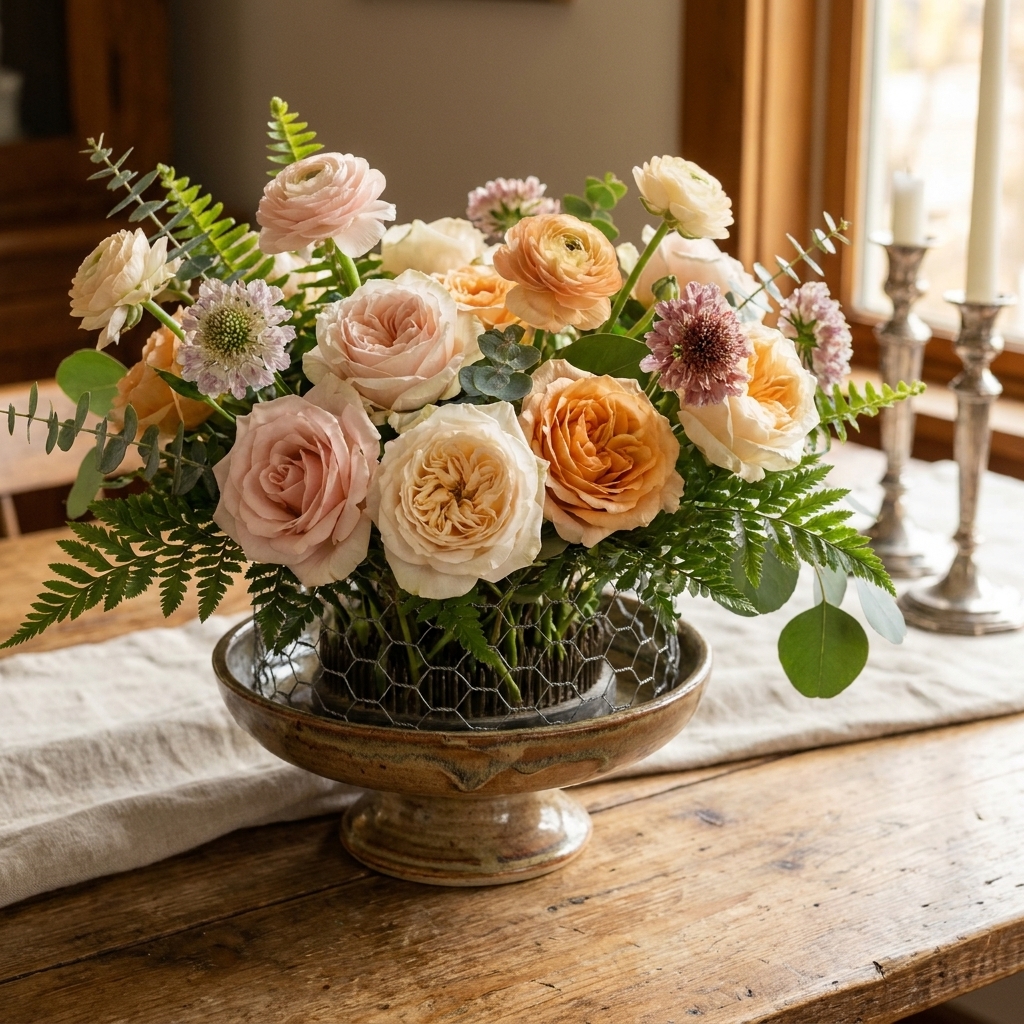
If you are going foam-free with your centerpieces and want mechanics that play nicely with greenery runners, I am a big fan of chicken wire and frogs. I walk through my favorite tools in Chicken Wire and Floral Frogs for Foam-Free Centerpieces.
Quick pairing ideas
- Most lush on a budget: fern base + seeded eucalyptus top
- Clean and modern: salal base + ruscus top
- Soft and romantic: silver dollar eucalyptus + seeded eucalyptus
- Garden party look: pittosporum + ruscus, with a few bud vases tucked in
- Holiday cozy: grocery cedar or pine + lots of votives (in glass, with flames well above greenery)
FAQ
What is the cheapest way to do a long greenery runner?
Use a grocery store green or a voluminous base (like salal or ferns), then add a smaller amount of a “signature” greenery on top (like seeded eucalyptus). Visually it reads like a premium mix, but you are not paying premium price for every inch.
How do I keep greenery runners from looking messy?
Pick a direction and commit to it. Lay most stems the same way, keep the runner roughly the same width all the way down, and make sure candles and decor repeat at a steady rhythm. If you need help with that “rhythm,” Tablescape Layouts for Mixed Table Shapes is a great planning guide even if you are working with all banquet tables.
Fresh or faux greenery for banquet tables?
If you need speed, predictability, and reuse, faux is fantastic. If you want the natural movement and scent, go fresh. I decide based on setup time and weather. Outdoors in heat or wind, faux can be the calmer choice.