
Keep thick, pre-lit garland from sliding or scuffing your staircase. Learn damage-free methods with releasable zip ties and felt, wire for spindles, and wall...
Gathova
Real vs. Faux Pine Garland for Your Holiday Mantle

Joanna Mercer
Joanna Mercer is an enthusiastic DIY event decorator and the creative spirit behind Gathova's party guides. With years of hands-on experience designing stunning tablescapes, balloon garlands, and custom photo backdrops for friends and family, she specializes in accessible, budget-friendly celebrations. Joanna loves sharing her practical tips and crafting tutorials to help anyone turn an ordinary space into a memorable party venue.
Published · Last updated
I have a very specific holiday decorating personality: I want my living room to smell like a tree lot, but I also want to finish styling the mantle early enough to actually enjoy it. That is exactly why the real vs. faux pine garland question comes up every year in my house.
If you are dressing a fireplace mantle, you are dealing with a few extra factors most tablescapes never have. Heat is the big one if the fireplace is active. If you burn wood, you may also be dealing with soot and smoke residue. And no matter what type of fireplace you have, the mantle is where we all want to pile on lights and candlelight. Cozy, yes. Risky, sometimes.
Below is the honest comparison I wish someone had handed me when I first started building my “make it cozy, make it safe, make it last” holiday setup.
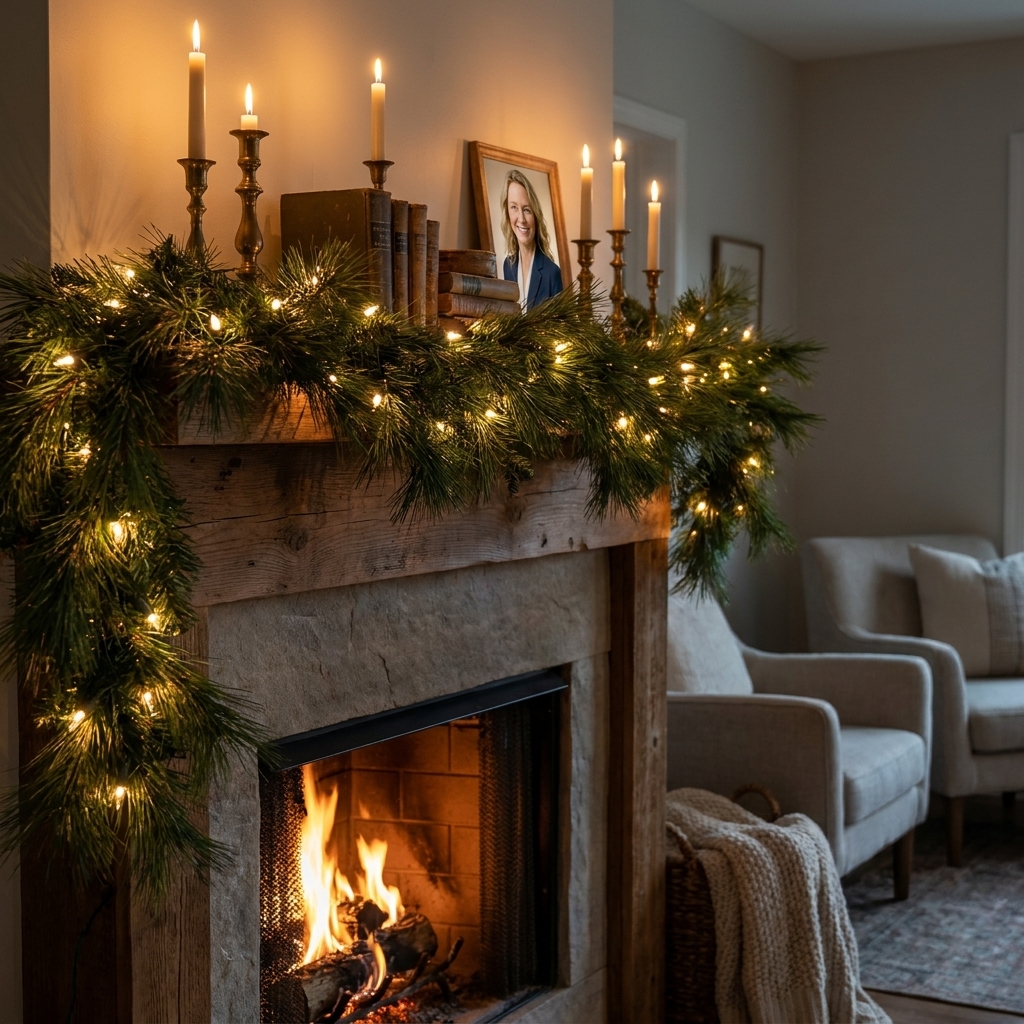
The quick verdict
- Choose real pine garland if scent and natural texture matter most, your mantle is not used frequently, and you are decorating for a shorter window.
- Choose faux pine garland if you want a mantle you can style once and leave up, you need the easiest option to manage near heat, or you love adding picks, ribbon, and ornaments without worrying about crushing needles.
- Choose a hybrid if you want realism without the mess: faux garland as the base, then tuck in a few fresh clippings (kept away from heat sources) for that just-cut look.
Cost: what you really pay for
The real cost is not just the price tag. It is how many times you rebuy, how much you lose to shedding, and whether you can reuse the same base year after year.
Real pine garland
- Typical cost pattern: You pay less upfront for a single season, but you pay again every year. If you need multiple 6 to 9 foot strands to get a full, drapey look, the total can climb quickly.
- Hidden costs: Command hooks, floral wire, extra ribbon or picks to cover thin spots, and sometimes a last-minute replacement if it dries out early.
- Best value use: Short holiday window, like a party week, a weekend open house, or Christmas week through New Year’s.
Faux pine garland
- Typical cost pattern: Higher upfront, but your cost per season drops fast if you store it well.
- Hidden costs: Storage bin, maybe extra picks to make it look more realistic the first year.
- Best value use: Long decorating season, like mid November through January, or if you decorate more than one mantle or staircase and want matching greenery year to year.
If you are already a “reuse the base, refresh the accents” person, faux wins on budget over time. I use the same approach for other decor pieces too: build a flexible base and swap details per theme. If you love stretching a budget, you will probably enjoy the mindset in Budget Party Hacks. It is written for parties, but it applies beautifully to holiday styling.
Durability: how long it looks good
Real pine garland longevity
Fresh garland starts aging the moment it comes inside. Heat, dry air, and direct sun speed up needle drop and browning.
- Expected “peak” window: Often 7 to 14 days looking lush, but it can be as short as a week near an active fireplace and much longer in a cool, humid space. Species matters too. Fir types (like noble fir) often hold needles better than many pines, while cedar stays fragrant but can dry faster and shed more.
- What ruins it fastest: A working fireplace, heat vents blowing upward, and lights that run hot.
- How to stretch it: Keep it away from heat sources, avoid crushing it under heavy decor, and only mist lightly if the seller says that species tolerates it. If you mist, do it with control. You do not want water dripping down onto a slick hearth or into a walkway where someone could slip.
Faux pine garland longevity
Faux garland is basically a long-term prop. It gets tired-looking from poor storage, not from time on the mantle.
- Expected “peak” window: Weeks to months without changing.
- What ruins it fastest: Being packed too tightly, stored damp, or smashed under heavier bins.
- How to keep it pretty: Fluff it like a Christmas tree, store it in a roomy bin, and keep it out of extreme heat (like an attic) if possible.

Types to know
You do not need to memorize garland categories to make a good choice, but a little context helps when you are shopping.
Common real garland types
- Fir (often fuller and longer-lasting): Typically great needle hold and a more “designer” look when you want lush, layered texture.
- Pine (classic scent and drape): That unmistakable tree-lot vibe, but it can dry out faster near heat and may shed more depending on freshness.
- Cedar (soft, airy, and fragrant): Beautiful for relaxed, natural styling, but it can dry and drop bits faster indoors. Handle gently.
Common faux garland materials
- PE tips: Often the most realistic up close because the needles are molded for a more natural shape.
- PVC tips: Often more budget-friendly and can look great once fluffed and layered, but can read flatter or “bristlier” without added depth.
- Mixed tips: A blend can be a sweet spot: realistic outer tips with fuller filler inside.
Realism: what looks best up close
If your mantle is in the background of holiday photos, realism matters. If it is the first thing guests see when they walk in, realism really matters.
Real pine garland
- Best at: Natural irregularity, true needle texture, and that soft, slightly wild drape.
- Looks especially good with: Minimal styling. A few velvet bows, dried orange slices, or simple ornaments can feel very high-end because the greenery is doing the heavy lifting.
Faux pine garland
- Best at: Staying full, holding shape, and giving you a consistent base to decorate.
- What makes it look real: Mixed needle types, varied greens, a few realistic brown stems, and depth. If yours looks flat, add a handful of inexpensive greenery picks to create shadows and dimension. The idea is similar to how I build lush runners for tables. My favorite low-cost filler options are in 7 Inexpensive Greenery Picks for Lush Table Runners, and the same picks work tucked into a mantle garland.
Styling: lights, ornaments, bows
This is where faux usually wins for mantle decorating, because you can manhandle it a little without fear of needles raining down.
Real pine styling notes
- Great for: Loose draping and effortless, organic shape.
- Tricky with: Heavy ornaments, repeated repositioning, and lots of wire twisting. You can absolutely decorate it, but be gentle.
- Pro tip: If you want ornaments, use lighter ones and hang them from the mantle itself (like from small removable hooks) so the garland is not bearing all the weight.
Faux pine styling notes
- Great for: Fully loaded looks: ribbon weaving, clusters of ornaments, picks, and long light strands.
- Holds shape: You can train faux garland to swoop exactly where you want and it will stay there.
- Pro tip: Fluff first, then lights, then big accents, then small fill. If you do lights last, you will fight every pick and bow you already attached.

Hanging and attachment
A mantle can be surprisingly awkward to decorate because you are attaching to a finished surface you do not want to damage, often above a heat source.
My go-to methods
- Removable hooks (my default): Great for most painted mantles. Place a few, then drape the garland and adjust. Clean the surface first so the hooks stick well.
- Stocking hooks as anchors: Even if you are not hanging stockings yet, they can act like weighted “stops” to keep garland from creeping.
- Floral wire for shaping: Use it to tie garland to itself (not to the mantle) to create neat swoops, then secure the whole piece with hooks.
- Protect the finish: Anywhere wire or a hook might rub, add a small felt pad or a bit of soft fabric as a buffer. Sap and scratches are the two things I try hardest to avoid.
If you also decorate staircases and want greenery to stay put without damaging wood, the same “secure it without shredding the finish” approach applies. This guide is staircase-specific, but the attachment mindset transfers: Hang Heavy Christmas Garlands on Staircases Without Damaging Banisters.
Cleanup and allergies
Real pine
- Cleanup: Needles will drop. Plan on vacuuming around the hearth and any rug directly underneath.
- Sticky spots: Some garlands can leave sap on hands or mantle surfaces, especially if the greenery is fresh and handled a lot.
- Allergies: Pine scent and natural plant material can bother sensitive noses. If that is your household, faux is the kinder choice.
Faux pine
- Cleanup: Minimal, usually just a little dust.
- Allergies: Generally easier for allergy-prone homes, but do dust it before setup if it has been stored a while.
Mantle safety
This is the section I take seriously every single year. Mantles tempt us to stack greenery, string lights, and candles in one spot. Add an active fireplace and you have real risk. If you use your fireplace, prioritize safety over aesthetics.
Key safety rules
- Do not drape any garland into the firebox opening or allow it to hang close enough that it could be pulled or blown inward.
- Leave generous clearance from heat. Fireplaces vary, and heat can travel farther than you expect. Follow your fireplace manufacturer guidance and use common sense: if the mantel area feels warm to the touch, your greenery is too close.
- Assume real greenery is flammable once it dries. Fresh garland may feel moist at first, but it becomes fuel as it dehydrates.
- Use cool-running lights only. Choose LED string lights and do not pinch cords under heavy decor.
- Skip open-flame candles on the mantle if you have garland nearby. If you love candlelight, use flameless candles on the mantle and save real flames for a safe surface elsewhere.
- Do a quick weekly check. Look for browning, shedding, dried spots, or any heat damage to faux tips. If something looks compromised, take it down.
Real garland safety notes
If you plan to burn fires regularly, fresh garland is the riskier pick. The longer it stays up, the drier it gets. If you still want it, keep the garland higher on the mantle, keep it shorter and tighter so it cannot droop, and take it down as soon as it starts drying.
Faux garland safety notes
Some faux garlands are marketed as flame-retardant, but that is not universal and it does not mean “safe to place near heat.” Check the label, keep greenery well away from heat and flame, and avoid combining garland with open flame on the mantle.
For general holiday fire prevention tips and how quickly dry greenery can ignite, the National Fire Protection Association has a helpful overview here: https://www.nfpa.org/education-and-research/home-fire-safety/holiday-fire-safety.
Decision guide
Pick real pine garland if:
- You want that unmistakable evergreen scent.
- Your fireplace is decorative only, or you rarely use it.
- You are decorating for a shorter time window.
- You love a softer, more natural drape and you are keeping styling minimal.
Pick faux pine garland if:
- You light your fireplace often.
- You want your mantle to look good for weeks with zero maintenance.
- You plan to load it up with ribbon, ornaments, and picks.
- You want a reusable base you can tweak year after year.
Pick a hybrid if:
- You want the convenience of faux but crave a touch of fresh realism.
- You like the idea of swapping small bundles of fresh clippings every week while keeping a stable faux foundation.
Mantle formulas
Formula 1: Minimal
- 1 lush garland (real or faux)
- Warm white LED lights tucked deep
- 3 to 5 velvet bows spaced evenly
- One focal piece, like a wreath or mirror above the mantle
Formula 2: Ornament clusters
- Full faux garland base, fluffed aggressively
- Ornaments in clusters of 3 to 5 (mix matte and shiny)
- Wired ribbon weaving in two passes (one tight, one looser)
- A few contrasting picks for depth, like frosted berries or pinecones
Formula 3: Cozy natural
- Fresh garland kept higher on the mantle
- Dried citrus slices, cinnamon sticks, or pinecones
- Flameless candles only
- A soft stocking lineup, evenly spaced
If you like decorating with light and want to keep things safe, you may also like my outdoor guide for managing cords, clips, and weather. Different setting, same safety mindset: How to Safely Hang Fairy Lights Outdoors.
FAQ
Will fresh pine garland ruin my mantle?
It can, mainly from sap or moisture against paint or stain. Use a protective barrier where it touches the surface, like felt pads under attachment points, removable hooks, or a thin runner of kraft paper hidden behind the garland. Do not tape directly onto finished wood.
How do I make faux garland look less fake?
Fluff it branch by branch, then add depth with a few extra picks tucked into the interior so you see shadows. Finish with ribbon or a limited ornament palette. Faux looks most realistic when it is not over-themed.
Can I put garland on a mantle if I use the fireplace?
You can, but you need to be conservative with placement and materials. Keep greenery far from heat and flame, use LED lights, avoid open-flame candles on the mantle, and watch for drying or heat damage. When in doubt, decorate the surround area away from the opening and keep the mantle itself minimal.
Is flocked garland safer?
Not automatically. Flocking can be messy and can react differently to heat depending on materials. Treat it like any other decor near a fireplace: keep distance from heat, do not combine with open flame, and follow any manufacturer guidance.
What I do most years
If I am hosting a holiday dinner and want my house to smell amazing, I go real, but only for a short stretch and never with a roaring fire. If I want the mantle to carry me through the whole season with minimal fuss, I go faux and spend my energy on ribbon, lights, and a few special accents.
Either way, the best mantle is the one you can actually relax around. Cozy is the goal. Safe is the requirement.