
Not sure if you should go tall or low? This practical guide breaks down visual impact, guest conversation, table shapes, venue rules, and cost—plus when to m...
Gathova
Fresh Citrus Tablescapes That Look Like Summer

Joanna Mercer
Joanna Mercer is an enthusiastic DIY event decorator and the creative spirit behind Gathova's party guides. With years of hands-on experience designing stunning tablescapes, balloon garlands, and custom photo backdrops for friends and family, she specializes in accessible, budget-friendly celebrations. Joanna loves sharing her practical tips and crafting tutorials to help anyone turn an ordinary space into a memorable party venue.
Published
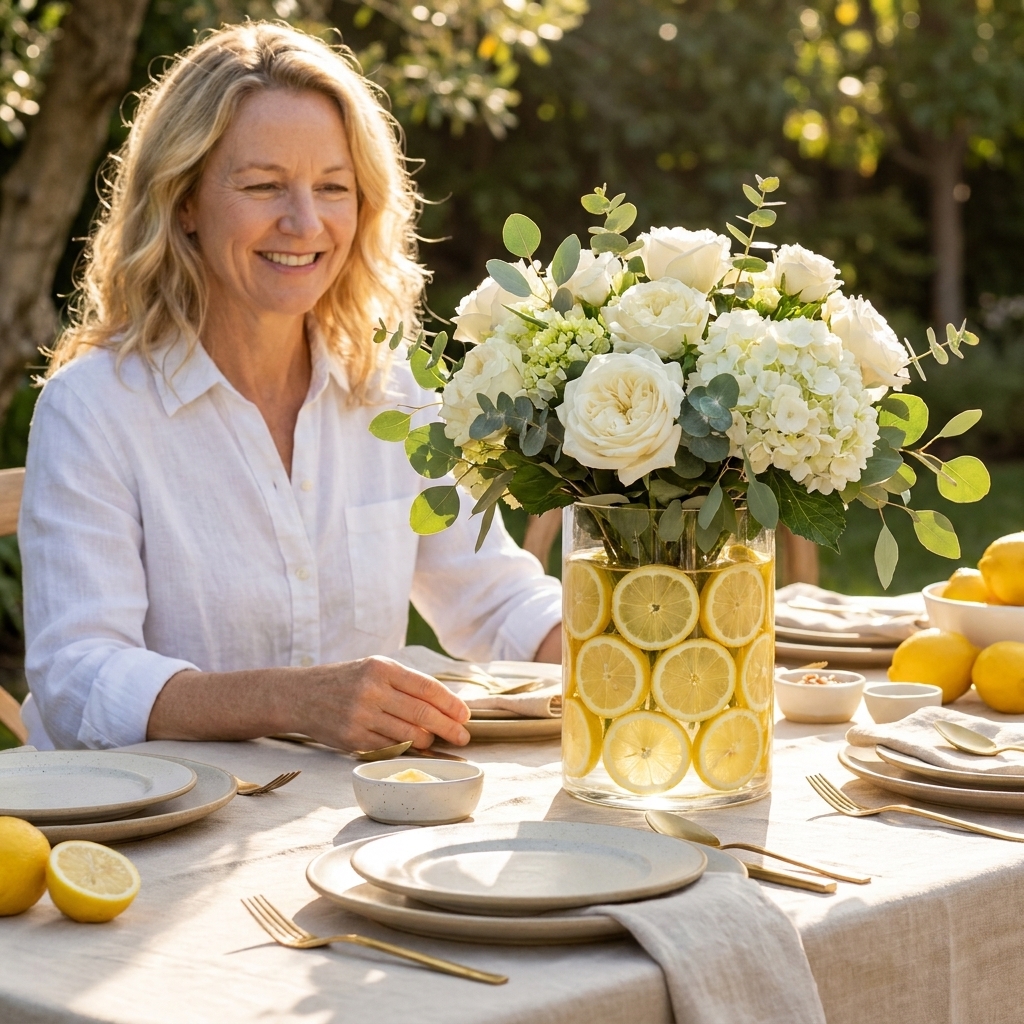
The first time I tucked lemon slices into a clear vase, it was for a backyard July birthday where we had exactly two goals: keep it cheerful and keep it easy. The citrus did both. It made a basic grocery store bouquet look like I planned it a week in advance, and it photographed beautifully even after the sun started setting. If you want that bright, breezy summer look without spending your whole budget on flowers, fresh citrus is your best friend.
Pick citrus that fits your palette
Citrus is basically a color wheel you can eat later. Here is how I choose what to buy based on the vibe:
- Lemons: crisp, classic, high contrast with white florals and greenery. The most clean-looking option.
- Limes: fresh and modern, especially with tropical leaves or bright pink accents.
- Oranges: warm and bold, great for sunset palettes, terra cotta, coral, and gold.
- Grapefruit: soft peachy pink, perfect for romantic brunches and baby showers.
- Mixed citrus: playful and abundant, ideal for long tables and casual summer dinners.
My shopping tip: Choose fruit with smooth, tight skin (less pith showing) for the prettiest slices. If you can, grab one extra piece per arrangement. You will always want backup slices.
Line a clear vase with slices
If you only try one citrus trick, make it this one. It gives you maximum impact with minimum fuss.
What you need
- Clear glass cylinder or straight-sided vase
- Fresh citrus (lemons are the easiest to start with)
- A sharp knife and cutting board
- Paper towels
- Flowers and greenery
- A smaller insert vase or a drinking glass (optional but highly recommended)
Step-by-step
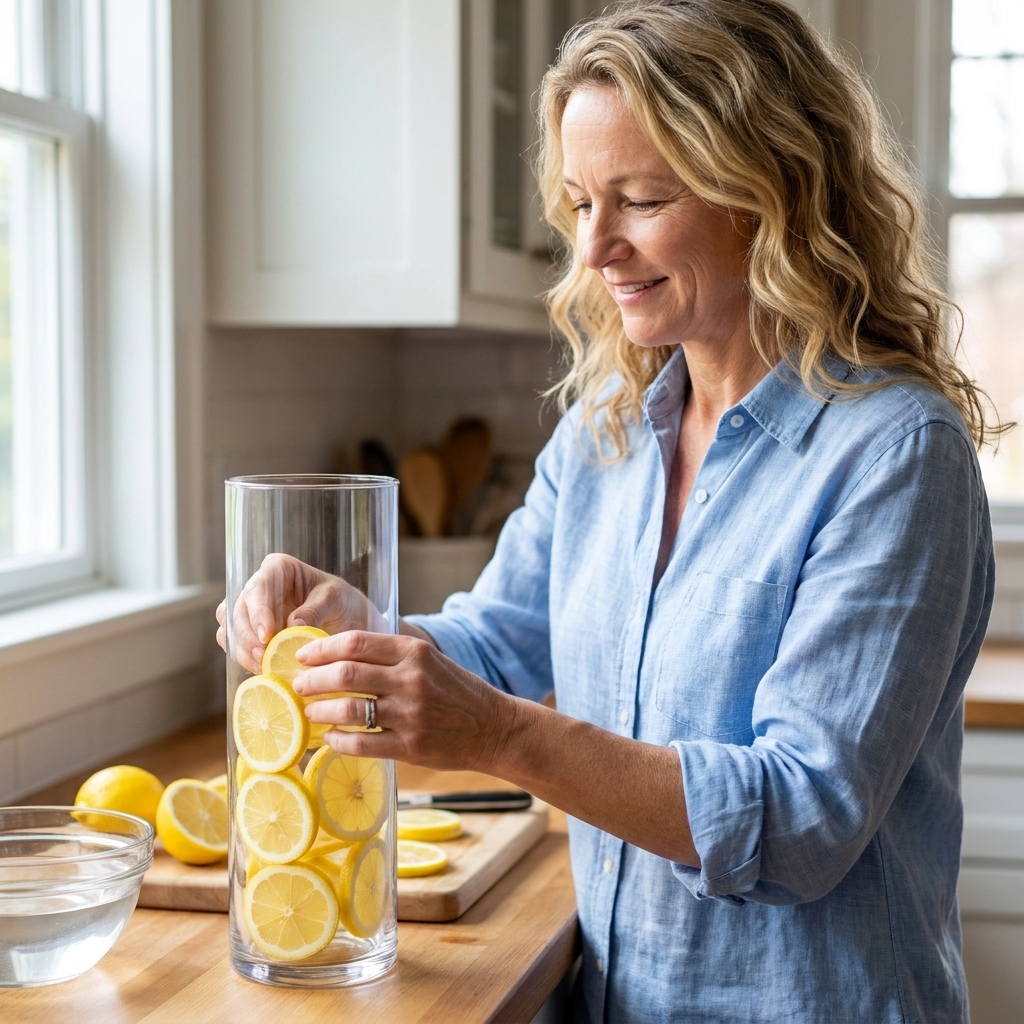
- Slice evenly. Aim for 1/4 to 3/8 inch thick. Too thin and they slide. Too thick and they bulge.
- Pat slices dry. This helps them grip the glass instead of drifting.
- Build a citrus “wall.” Press slices against the inside of the vase. Overlap slightly like shingles if your vase is wide.
- Use an insert for the flowers. Place a smaller vase or glass in the center. This keeps stems off the fruit and makes water changes easier.
- Add water slowly. Pour between the outer vase and the insert first. The slower you go, the less the slices float.
- Arrange your flowers. Keep it looser than you think. Citrus reads freshest when the florals feel airy.
Best flowers with lemons: white mums, daisies, roses, lisianthus, baby’s breath, chamomile, and anything with soft greenery like ruscus or eucalyptus. If you want a budget bouquet to look higher-end, use my baby’s breath tricks from How to Make Baby’s Breath Look Expensive.
Three looks that always work
1) The “market bouquet” centerpiece
Buy one big grocery store bouquet, split it into two or three smaller arrangements, and use citrus to make each one feel intentional.
- Use lemon slices in the vase.
- Add extra greenery if you have it (even a few stems makes it look designed).
- Finish with a simple napkin fold and layered place settings. If you want a refresher, I love this guide: Layer Chargers, Plates, and Napkins Like a Pro.
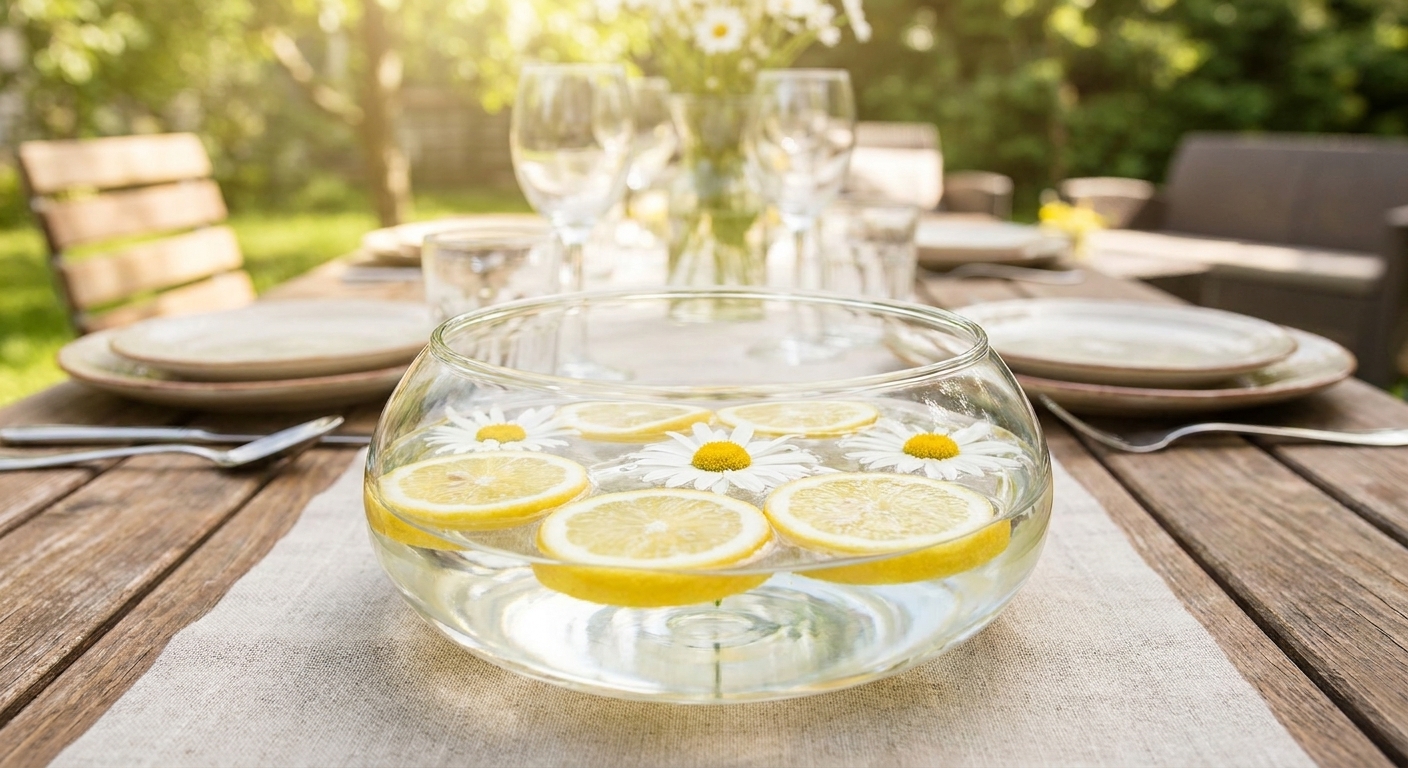
2) The floating citrus and blooms bowl
This one is perfect for low centerpieces that do not block conversation.
- Use a wide, shallow glass bowl.
- Add 1/2 to 1 inch of water.
- Float thin citrus slices and a few blooms with sturdy heads (spray carnations, daisy mums).
- Keep blooms above the waterline when you can, or trim stems very short so petals are not sitting submerged.
- Keep it simple. Two or three flowers look cleaner than stuffing it full.
3) The citrus cluster runner
Instead of putting citrus in water, use whole fruit as part of a table runner.
- Scatter whole lemons and limes down the center with sprigs of greenery.
- Add a few bud vases with single stems to break up the line.
- Protect the surface if your table is bare wood. A linen runner, tray, or a simple layer of kraft paper under the fruit keeps condensation and juice from leaving marks.
- Keep candles in holders, not directly on the table, and give flames space. If you use tapers, this is my go-to safety fix: How to Secure Taper Candles on Event Tables.
Slice, stack, and keep it fresh
Slicing tips that look styled
- Cut the ends off first so the slices show full circles.
- Use the knife that gives you the cleanest cut. A serrated knife can help on slippery citrus, but a very sharp chef’s knife also works great.
- Go uniform for modern tables. Mix thicknesses only if you want an organic, rustic look.
Stacking and spacing ideas
- Full stacks: Fill the vase wall-to-wall with slices for a punchy, high-end look.
- Spaced stacks: Leave small gaps between slices for a lighter, spa-like vibe.
- Alternating citrus: Lemon-lime-lemon-lime reads super fresh, especially with white flowers.
Keeping it fresh longer (my real-world party rules)
- Assemble the same day. I try to slice and build within the day, then adjust based on heat, slice thickness, and how long it will sit out.
- Keep arrangements cool until guests arrive. A few hours in an air-conditioned room helps a lot.
- Use an insert vase. It reduces pulp shedding into the stem water and makes swapping water easier.
- Avoid direct sun. Sunlight speeds up fading and makes slices float and drift.
- If you need clearer water, start clean. A quick rinse and pat-dry removes extra pulp, and using filtered water can help keep things looking crisp.
Good to know: In my experience, cut citrus sitting directly against delicate petals and stems can shorten vase life. Keeping the fruit and the stem water separated with an insert helps a lot.
Use fresh citrus without the mess
When people say “fruit in arrangements,” they often picture a chaotic still life. You can absolutely do this in a clean, modern way.
Two tidy approaches
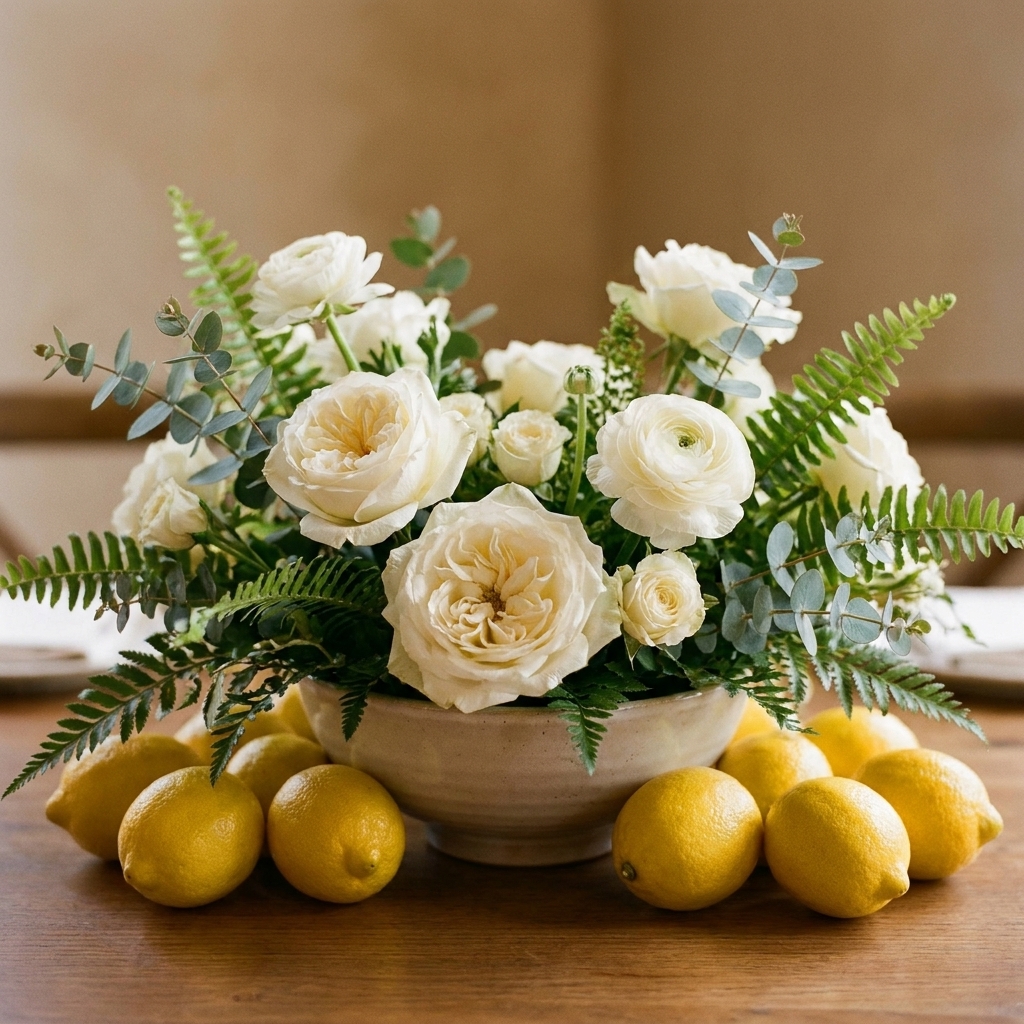
- Skewer-and-hide: Skewer a small whole lemon or lime on a bamboo skewer and tuck the skewer down into the greenery so only the fruit shows. This works best in low, lush arrangements.
- Fruit at the base: Place whole citrus around the base of the centerpiece instead of inside it. It still reads cohesive and it is much easier to adjust last minute.
If you build foam-free centerpieces, you will love how sturdy the skewer trick feels when paired with a real structure. My favorite method is in Chicken Wire and Floral Frogs for Foam-Free Centerpieces.
Vases that make citrus look pricey
- Clear cylinders: The easiest, cleanest look for stacked slices.
- Hurricanes: Great for a citrus ring around a candle holder, with slices pressed to the glass.
- Square vases: Modern, but trickier. Use thicker slices so they do not slide.
- Bud vases: A single lemon wheel in each tiny vase is adorable for brunch tables.
Budget move: Thrift store glass is perfect for this because citrus distracts from minor scratches. I have a whole soft spot for thrift flips, and I rounded up ideas here: Thrift Store Decor Flips: 9 High-End Event Props.
Food and outdoor notes
- Watch for pests outdoors. Cut fruit can attract fruit flies and ants, especially in heat. I keep centerpieces inside and cool until the last possible minute, and I do not leave cut citrus out overnight.
- Dispose after the event. Once fruit has sat out for hours, I toss it rather than trying to store and reuse it.
- Protect surfaces. Condensation and a little citrus juice happen. If you are styling whole fruit directly on a table, use a runner, tray, or liner underneath.
Quick troubleshooting
“My slices keep floating up.”
- Pat slices dry before placing.
- Add water slowly along the side of the vase.
- Use slightly thicker slices.
- Pack slices more tightly so they support each other.
“The water looks cloudy.”
- Use an insert vase so stems are not in the citrus water.
- Rinse slices quickly and pat dry to remove extra pulp.
- Build the citrus wall right before the party, not the day before.
- If it is on display longer than a few hours, swap the outer water to keep it looking clear.
“The whole centerpiece feels too bright.”
- Add a neutral table runner (linen, kraft paper, or a soft gauze).
- Pull in one grounding color like sage green, navy, or terracotta in napkins or candles.
My go-to citrus recipes
Lemon and white (classic summer)
- 1 clear cylinder vase
- 4 to 6 lemons, sliced
- 1 bouquet of white flowers
- 2 to 3 stems greenery
Pink grapefruit brunch (soft and pretty)
- 1 wide bowl or compote
- 2 grapefruit, thinly sliced for floating
- 5 to 7 single blooms (peonies when in season, roses, or carnations)
Mixed citrus dinner party (casual abundance)
- Whole lemons, limes, and oranges scattered as a runner
- 3 to 5 bud vases with single stems
- Simple candles in holders
Need help deciding centerpiece height for your table size and guest list? This pairs nicely with Tall vs Low Centerpieces.